Barbora Hinnerova
SPATIAL EXPERTISE
4 MINS READ
Mastering Branch Network Optimization with Location Intelligence
See how Location Intelligence helps you optimize your branch network based on real demand, mobility, and customer behavior – from identifying white spaces to reducing cannibalization.
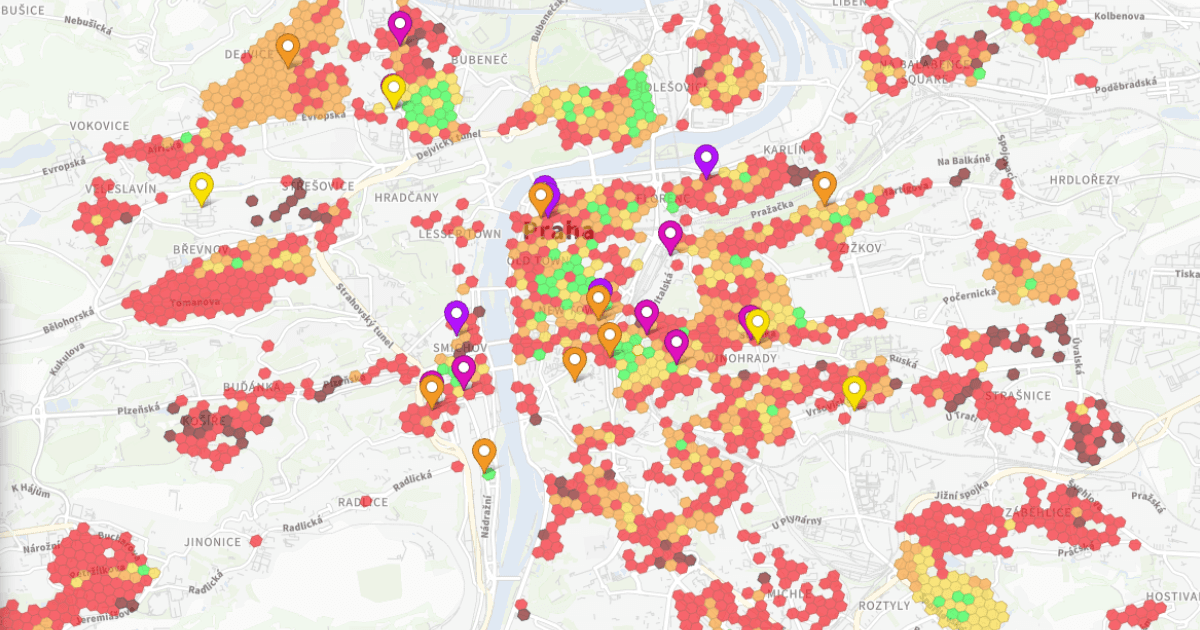
Branch Network Optimization is a broad topic, especially when it comes to Location Intelligence. Let’s break it down and answer the most frequent questions you might have.
How can I use Location Intelligence to optimize my branch network?
Location Intelligence helps you make branch network decisions based on how markets and customers actually behave, not on assumptions or historical averages. By connecting branch performance, customer locations, demographics, mobility patterns, and competition on a map, you can see where your network works well, where it overlaps, and where demand is underserved.
This allows you to decide which branches to open, close, relocate, or redesign in a way that improves overall network performance, market coverage, and customer accessibility.
How do I decide where it makes sense to open a new branch?
Opening a new branch starts with understanding real local demand, not just population size. Location Intelligence helps you evaluate a location based on:
Demographics and purchasing power
Who lives or works in the area, their income levels, age structure, and lifestyle characteristics.Customer mobility and travel behavior
How people move through the area, typical travel times, commuting patterns, and whether the location fits into their daily routes.Accessibility and transportation
How easy it is to reach the location by car, public transport, or on foot, including parking availability and travel time compared to existing branches.Points of Interest (POI) and foot traffic drivers
Presence of retail, offices, public services, or other destinations that naturally bring people to the area.Distance to existing branches and network coverage
Whether a new branch would expand market reach or mostly overlap with current catchment areas.
Local competitive pressure
Number, type, and proximity of competitors serving the same demand.
By analyzing these factors together, you can estimate the realistic market potential of a specific location and avoid opening branches that look attractive on paper but fail in practice.
How can I identify “white spaces” and gaps in market coverage?
White spaces are areas with sufficient demand but weak or no coverage from your existing network. Location Intelligence identifies these gaps by comparing customer demand, population characteristics, and mobility with your current branch catchment areas.
This helps you distinguish between areas that truly lack coverage and areas that are already served by nearby branches or competitors. As a result, expansion decisions are focused on locations that can actually grow the network instead of shifting demand within it.
How can I tell which branches to strengthen, redesign, merge, or close?
Branch-level performance alone is not enough to answer this question. A branch may underperform because of overlap with nearby locations, changes in mobility, or increased competition—not because the location itself is weak.
Location Intelligence allows you to analyze each branch in the context of the entire network by looking at:
Overlapping catchment areas and cannibalization
Customer redistribution if a branch is closed or relocated
Accessibility changes for different customer segments
Cost-to-serve versus local demand
This makes it possible to optimize the network as a whole, not just individual locations.
How do I evaluate cannibalization between nearby branches?
Cannibalization occurs when branches compete for the same customers instead of expanding market reach. Using Location Intelligence, you can quantify cannibalization by analyzing overlapping catchment areas, shared customer origins, and travel times.
Scenario modeling helps simulate what happens if one branch is closed, moved, or resized. You can see how demand redistributes across the network and whether lost traffic is recaptured by nearby branches or lost entirely.
Adjusting your branch network – whether you're closing a location or opening a new one – is never a simple decision. It affects how and where your clients interact with you, and it can create ripple effects across your entire network.
What if you could clearly see:
how many clients will be affected,
where they’re likely to go,
and how each change will impact other branches?
That’s why we at CleverMaps have developed a unique model that uses mobility data to accurately predict where your customers will go and what the impact of every network change will be.
Using just your clients’ addresses and your current branch layout, we simulate real-world outcomes – showing traffic shifts, changes in branch load, and potential blind spots. Everything is visualized in an interactive map, updated with every scenario you test.
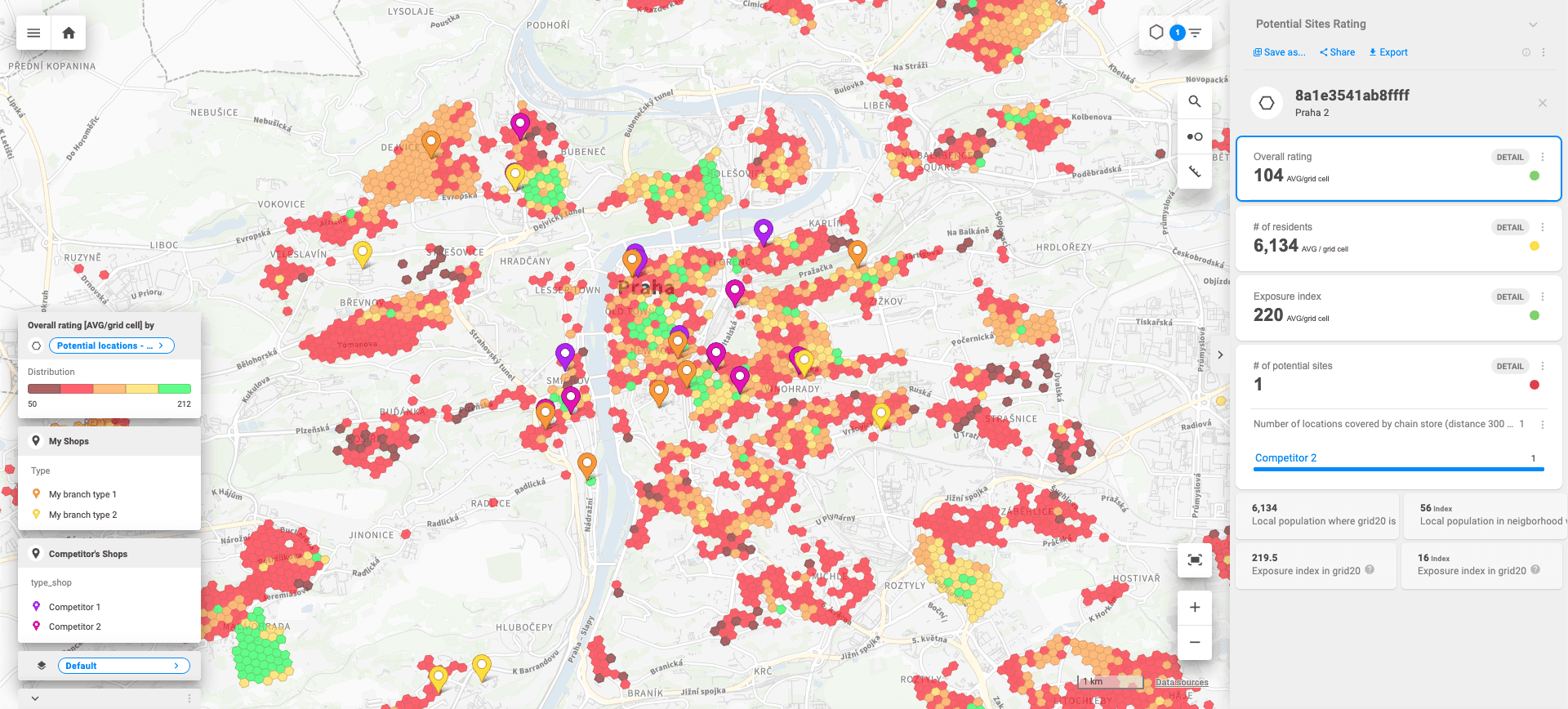
Branch Network Optimization visualized in CleverMaps Studio.
How can I measure the impact of closing or relocating a branch on customers?
Closing or moving a branch affects customers differently depending on where they live, how they travel, and which services they use. Location Intelligence makes these effects visible by analysing how changes in travel times and accessibility reshape catchment size and structure, alter coverage for specific customer segments, and shift proximity to alternative branches or channels. This makes it possible to estimate customer attrition risk and ensure that network changes do not disproportionately affect certain groups.
How do catchment areas really work in branch network planning?
In practice, catchment areas are not simple radius circles. They are shaped by road networks, public transport, competition, and customer behavior.
Location Intelligence models realistic catchments based on travel time, mobility data, and observed customer patterns. This results in more accurate estimates of branch reach, market penetration, and local demand.
What data do I need for branch network optimization?
Most branch network projects combine internal and external data:
Internal data
Branch locations and formats
Revenue, transactions, and costs
Customer addresses or activity locations
Product usage and service mix
External data
Demographics and purchasing power
Mobility and accessibility
Competitor locations and formats
Points of Interest and land use
The value comes from combining these datasets spatially, not from analyzing them in isolation.
How can I use scenario modeling and “what-if” analysis for branch planning?
Scenario modeling allows you to test different network configurations before making real decisions. Instead of committing to one fixed plan, you can simulate concrete scenarios such as closing or merging specific branches, relocating a branch within the same city, opening new branches in selected areas, or changing the size or role of existing locations. Location Intelligence then shows how each scenario affects coverage, cannibalization, accessibility, and estimated performance, making trade-offs explicit before any real-world costs occur.
How does Location Intelligence support long-term branch strategy?
Customer behavior, mobility, and demographics change over time. Location Intelligence helps translate these trends into concrete network decisions, such as adjusting branch density, redefining branch roles, or aligning physical presence with digital channels.
Instead of reacting to declining performance, companies can proactively adapt their branch footprint to future demand.
Real‑world results: Reducing Branch Network by 35% While Maintaining Client Access and Profitability
One of our clients, Generali Česká pojišťovna, faced the challenge of consolidating nearly 800 branches after a major merger. Using CleverMaps, they successfully reduced their network by 35% – to around 520 branches – without compromising client access or profitability.
Their key takeaways from using Location Intelligence for branch optimization were:
Identified underperforming branches with minimal impact on customer service
Simulated the impact of each closure on surrounding branches
Made informed decisions that balanced cost savings with service quality
Read the full case study here: Reducing Branch Network by 35% – Case Study
How can branch network optimization support marketing and operations?
Branch networks influence more than real estate decisions. Location Intelligence supports local marketing aligned with real catchment areas, enables smarter distribution of leaflets and outdoor campaigns, and helps coordinate branches, ATMs, partner locations, and digital channels as one spatial system. At the same time, it allows ongoing monitoring of branch performance directly on a map, connecting strategic planning with daily operations and marketing execution.
How often should branch networks be reviewed and updated?
Branch network optimization is not a one-time project. Most organizations benefit from regular reviews, especially when markets change quickly, competition increases, or customer behavior shifts.
Continuous monitoring ensures that decisions remain based on current conditions rather than outdated assumptions.
Would you like to see how branch network optimization works in practice? Schedule a demo with the CleverMaps team.